The Heavy Burden of Borrowed Money
I used to stare at the ceiling at 3 AM, completely paralyzed by the thought of my negative bank balance. Every single notification on my phone felt like another collector ready to demand money I simply did not have. I thought borrowing any amount of money made me a complete failure in the eyes of my family and friends. My chest would tighten every time a bill arrived in the mail, leaving me breathless and panicked. It took me a long time to realize that my deep fear was largely built on financial lies I heard from well-meaning people. Once I understood how money actually works, my entire financial life changed for the better.
The weight of unpaid bills is a heavy burden that slowly destroys your daily peace of mind. It creeps into your everyday conversations and makes you snap at the people you love the most. You probably skip dinners with friends because you are terrified of swiping your card for a simple meal.
Most hardworking people feel trapped in this same cycle of guilt, shame, and complete confusion. You work extremely hard all month just to watch your paycheck vanish into thin air the moment it hits your account. It feels like you are walking on a treadmill that keeps moving faster while you run out of breath.
This constant financial stress causes genuine physical health problems like chronic headaches and severe fatigue. When you believe all loans are purely evil, you miss out on amazing chances to actually grow your wealth safely. You end up making big life choices driven by pure panic rather than simple, logical math.
The truth is, society has fed us a massive lie about how borrowing money actually functions in the real world. We are taught to fear the concept itself, rather than learning how to control it as a helpful tool.
Reframing Your Financial Mindset
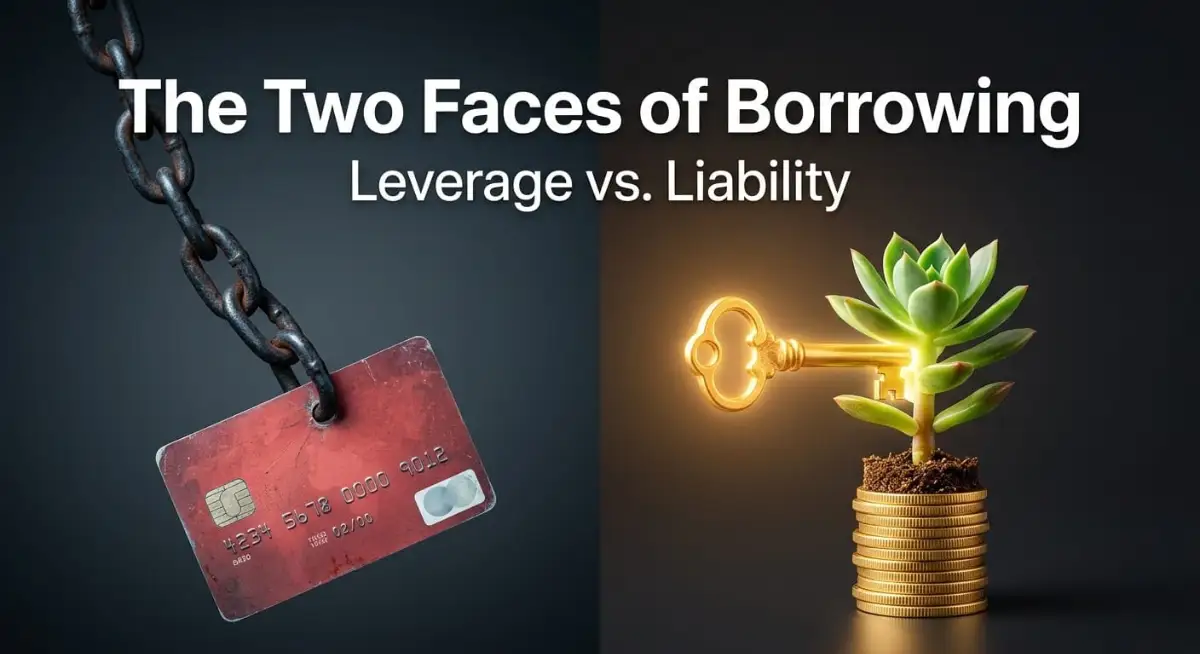
To completely fix this money problem, we need to completely wipe the slate clean and start with basic facts. A hammer can be used to build a beautiful family home, or it can be used to smash your thumb. Borrowed money works the same way, depending entirely on whose hand is holding the tool.
If you want to stop losing sleep over your finances, you have to separate your emotions from the numbers. Let us break down the exact strategies you can apply today to protect your bank account.
The Real Definition of Profitable Borrowing
Most financial gurus shout that you should pay for absolutely everything in cash, but that is simply not practical. If a business needs a loan to buy a new machine that doubles its daily profits, that loan is highly profitable. Good debt puts actual cash back into your pocket over a specific period of time.
Think about taking out a reasonable mortgage for a rental property in a growing neighborhood. The monthly rent you collect pays off the bank, and you get to keep the extra profit every month. You are essentially using the bank's money to build a permanent asset for your own family.
On the flip side, we have consumer borrowing, which is where the vast majority of normal people get trapped. Bad debt steals money out of your pocket without giving you any long-term financial return.
If you swipe your credit card to buy a massive flat-screen television, that TV drops in value the minute you open the box. You are now paying high interest on an item that would be practically worthless if you tried to sell it tomorrow. This is the exact trap that keeps the middle class broke and highly stressed.
Myth 1: Education Loans Guarantee a Golden Future
We are constantly told that taking out massive loans for a university degree is the smartest investment you can make. Parents push their children to borrow thousands of dollars because education is viewed as the ultimate ticket to success. However, treating all student loans as safe and productive borrowing is a dangerous trap.
If you borrow heavily to become a specialized doctor or a software engineer, the math usually works out in your favor. Your future salary will easily cover the monthly payments while leaving you with plenty of extra cash. In that specific scenario, the loan acts as a powerful lever to boost your lifetime earning potential.
But what happens if you borrow the same amount of money for a degree in a field with very low salaries? You will graduate with a massive financial anchor tied directly to your ankles. You will spend the next two decades struggling to make basic payments while your friends buy homes.
Always calculate your expected return on investment (ROI) before signing any educational loan documents. If the total loan amount is higher than your expected first-year salary, you need to seriously rethink your plan.
Stop scrolling and watch this quick breakdown! If you want to visually understand how wealthy people legally use the bank's money to get richer, this video explains it perfectly.
The Hidden Power of Plastic Money
A lot of people are completely terrified of credit cards and proudly cut them up with scissors. They believe that simply owning a credit card will force them to buy things they cannot afford. This is a massive misunderstanding of how the banking system actually rewards responsible consumers.
When I first started my financial journey, I completely avoided credit cards because I was terrified of falling into a dark hole. I quickly realized that by paying my balance in full every single month, I was actually getting free money through cashback rewards and building a rock-solid credit score. If you treat your credit card exactly like a debit card, it becomes a powerful shield against fraud.
A strong credit score is necessary if you ever want to buy a house or rent a nice apartment. Lenders use your credit history to decide if you are a trustworthy person to do business with. If you never borrow money, you have zero track record, making you a massive risk in their eyes.
The danger only appears when you start carrying a balance and paying those ridiculously high monthly interest charges. If you cannot afford to buy it in cash today, you cannot afford to put it on a credit card. Follow that simple rule, and credit cards will completely work in your favor.
Myth 2: Buying a Car on Finance is Always a Smart Move
Car dealerships are incredibly good at making you focus entirely on the low monthly payment rather than the total cost. They will stretch a car loan out for seven years just to make a luxury vehicle look affordable to a normal worker. This is one of the most common ways people accidentally destroy their monthly cash flow.
Cars are rapidly depreciating assets, meaning they lose a huge chunk of their value every single year. When you finance a new car, you are paying extra interest on a machine that is rapidly becoming worthless. After a few years, you might actually owe the bank more money than the car is even worth on the open market.
If you strictly need a reliable car to drive to a high-paying job, a modest car loan might be highly necessary. It becomes a tool that allows you to safely earn your daily income without worrying about breakdowns. But upgrading to a flashy sports car just to impress your neighbors is the absolute peak of bad borrowing.
Whenever possible, try to buy a reliable used car in cash to protect your monthly budget. If you must finance, keep the loan term short and ensure the payment is a tiny percentage of your overall income.
The Opportunity Cost of Erasing Your Mortgage Early
There is a huge emotional desire to pay off your family home completely so you can finally be debt-free. People will throw every single spare dollar they earn at their mortgage to make the bank go away faster. Emotionally, this feels amazing, but mathematically, it might actually be a terrible financial decision.
Let us look at a simple, real-life comparison to make this perfectly clear. Imagine your current home mortgage has a very low interest rate of around three or four percent. If you put your extra cash into a solid index fund, you might easily earn a historic average of eight to ten percent.
By paying off the cheap mortgage early, you are literally throwing away the difference in profit. You are tying all of your physical cash up inside the brick walls of your house. If an emergency happens tomorrow, you cannot easily go to the grocery store and pay for food with a brick from your wall.
Maintaining cash flow and investing in liquid assets is often much safer than trapping your money in home equity. Do not let the emotional rush of paying off a low-interest loan rob you of future wealth.
How to Detox Your Personal Finances Today
If you are currently drowning in bad consumer loans, you need to take aggressive action right now. Start by listing every single person or bank you owe money to on a blank piece of paper. Seeing the actual numbers written down removes the fear of the unknown and gives you a clear target.
You have to completely stop the bleeding by freezing your credit cards and refusing to borrow another single dime. Then, you can choose to attack the smallest balance first to get a quick psychological win. This is known as the snowball method, and it works wonders for people who feel totally overwhelmed.
Every time you clear a small balance, you gain immense confidence and free up cash for the next target. Soon, you will build intense momentum and smash through balances you previously thought were impossible to clear. Financial freedom is not about being a math genius; it is about changing your daily habits permanently.
By deeply understanding the stark contrast between borrowing to build and borrowing to consume, you take back control. You no longer have to fear the banking system or let financial anxiety ruin your precious family time. You are now equipped to make cold, calculated decisions that benefit your future self immensely.
Master The Art of Leveraging the Bank's Money
Now that we understand the basic difference between building wealth and destroying it, we need to dig a little deeper. The wealthiest people in the world do not hide their cash under a mattress. They actually use the banking system to multiply their net worth while protecting their own physical cash.
To achieve this level of financial peace, you have to start thinking like a smart investor instead of a terrified consumer. Let us break down a few advanced strategies that actually work in the real world. These are the exact methods smart money managers use to get ahead safely.
The Secret Power of Fixed Rates and Inflation
Most regular people completely misunderstand how inflation actually affects their borrowed money over time. We all know that the cost of groceries and gas slowly goes up, making our cash worth a little bit less every single day. But very few people realize that this same economic rule applies to the money you owe the bank.
Imagine you secure a thirty-year fixed mortgage on a rental property. Your monthly payment is permanently locked in and will never change, no matter what happens to the economy. Ten years from now, everyday items will cost more, and average salaries will naturally increase to match that reality.
However, your monthly mortgage payment stays the same as the day you signed the papers. You are essentially paying the bank back with cheaper dollars that are much easier to earn in the future. According to historical economic research on inflation and fixed-rate borrowing, this acts as a hidden wealth-building mechanic.
The bank slowly loses buying power over those thirty years, while your property value and rental income naturally go up. This is a massive secret to securing your financial future without taking on extreme daily stress. You are letting time and simple math do the heavy lifting for you.
Cracking the Credit Utilization Code
Everyone knows you need a good credit score, but the rules for getting one often feel like a total mystery. The banks heavily monitor something called your credit utilization ratio to decide if you are a safe bet. This simply means how much of your available credit you are actually using at any given time.
Most average financial guides tell you to keep this number below thirty percent to avoid angering the banks. But if you want to achieve an elite credit score, thirty percent is actually way too high. The absolute safest sweet spot is keeping your running balance strictly under ten percent of your total limit.
If you have a card with a ten thousand dollar limit, try never to let the statement balance cross one thousand dollars. This sends a powerful psychological signal to lenders that you do not desperately need their money to survive. If you want a deep dive into building a bulletproof personal budget, keeping your credit limits clean is step one.
You can actually cheat this system simply by paying off your credit card twice a month instead of waiting for the final bill. This keeps the reported balance incredibly low and forces your credit score to climb rapidly. It is a simple habit that takes exactly two minutes on your phone but saves you thousands in future interest rates.
Funding Income-Producing Assets Safely
The ultimate test of healthy borrowing is whether the item you buy actually generates fresh income on its own. We touched on rental properties earlier, but this same logic applies heavily to small businesses and side hustles. Sometimes, using your own savings to start a business is actually much riskier than using the bank's money.
Let us say you want to start a professional landscaping business that requires a heavy-duty truck and specific machinery. You could drain your entire family emergency fund to buy this equipment in cash. But if you have a slow month or a medical emergency, you are left completely exposed with zero safety net.
Alternatively, you could take out a low-interest commercial loan to buy the same equipment. The machines immediately allow you to take on large, high-paying jobs that easily cover the new monthly loan payment. You get to keep your personal emergency cash safe in the bank while the business pays for its own growth.
This is the very definition of healthy financial leverage. You always want to make sure the expected return heavily outweighs the cost of the borrowed funds. Mastering this concept is an incredible way of navigating the banking system to your absolute advantage.
Negotiating Your Way Out of High Rates
One major secret the credit card companies absolutely do not want you to know is that interest rates are often negotiable. If you have a solid history of making your payments on time, you actually hold a lot of invisible power. The banks want to keep you as a customer, and they know you can easily take your business elsewhere.
If you are stuck with a card charging a massive twenty-five percent penalty rate, simply pick up the phone and call them. Politely inform the customer service agent that you are thinking about moving your balance to a competitor with better terms. Ask them directly if they can lower your current interest rate to keep your account active.
You would be genuinely shocked at how often they will instantly drop your rate by several percentage points just to keep you happy. According to the Consumer Financial Protection Bureau, negotiating directly with lenders is a highly effective way to manage personal accounts. It costs you absolutely nothing to ask, but it can save you a massive amount of cash over the next year.

The Hidden Financial Traps That Keep You Broke
Even when you know the basic rules of money, it is incredibly easy to step into an invisible trap. The financial industry spends billions of dollars on clever marketing designed strictly to separate you from your hard-earned cash. They use highly emotional triggers to make terrible math look like a wonderful opportunity.
If you want to protect your family and your sanity, you have to learn how to spot these dangers from a mile away. Let us walk through the most devastating mistakes normal people make when they try to fix their financial lives.
The Balance Transfer Merry-Go-Round
When people feel completely overwhelmed by credit card payments, they usually look for a quick escape hatch. A massive marketing letter arrives in the mail offering a magical zero-percent balance transfer for eighteen months. It feels like a total blessing, so they immediately move their entire heavy balance to the brand-new card.
The math behind this move is technically smart because you temporarily stop paying those nasty interest charges. But the massive danger lies entirely in your daily human behavior and your underlying spending habits. Moving the money does absolutely nothing to fix the actual reason you overspent in the first place.
Most people feel a sudden rush of extreme relief when their old credit card balance suddenly drops to zero. Within a few weeks, they slowly start using that old card again for small, everyday purchases. Fast forward a year, and they now have two maxed-out credit cards and double the financial anxiety.
You should only ever use a balance transfer if you are fiercely committed to changing your lifestyle immediately. It is a temporary bandage, not a permanent cure for mastering cash flow management. If you do not cut up the old cards, the balance transfer trap will completely ruin your financial progress.
The Emotional Trap of Co-Signing
One of the most dangerous things you can ever do with your good credit score is lend it to somebody else. A family member or a close friend might come to you begging for a signature because the bank denied their loan application. They will promise you over and over again that they will make every single payment right on time.
You love them, and you want to help them succeed, so you sign the paperwork without thinking twice. What you do not realize is that the bank denied them for a very specific, mathematically sound reason. The lender looked at their financial history and decided they were highly likely to fail.
When you co-sign, you are legally taking on one hundred percent of the risk with absolutely zero reward. If your friend loses their job or simply forgets a payment, your pristine credit score takes a massive, devastating hit. The collection agencies will immediately come after your personal bank accounts to recover their lost money.
This specific situation destroys family relationships and causes immense psychological distress. The American Psychological Association frequently highlights how money disputes are a leading cause of severe family breakdowns. If you truly want to help a loved one, give them a cash gift you can afford to lose, but never give them your signature.
The Minimum Payment Illusion
If you look closely at your monthly credit card statement, you will notice the minimum payment box is always printed in a bold, friendly font. The bank desperately wants you to pay exactly that tiny amount and absolutely nothing more. This is because the minimum payment is mathematically designed to keep you trapped in a profitable cycle for decades.
Let us assume you have a modest five thousand dollar balance on a standard shopping card. If you only send them the required fifty dollars a month, the vast majority of that money goes straight toward the interest fee. Only a tiny fraction actually reduces the real amount of money you originally borrowed.
At that extremely slow pace, it could easily take you fifteen to twenty years to clear a simple shopping spree. You will end up paying the bank double or even triple the original price of the items you bought. This is exactly how the banking industry builds massive skyscrapers while normal folks struggle to buy groceries.
Whenever you are working on smart investing strategies, getting rid of high-interest consumer balances must be your absolute first priority. Always pay as much as you can comfortably afford above the minimum requirement. Every extra dollar you send is a direct blow to the chains holding your finances back.
Upgrading Your Lifestyle Too Fast
There is a very common disease that strikes people the exact moment they get a decent raise at work. It is called lifestyle creep, and it is the absolute silent killer of long-term wealth accumulation. The moment your paycheck goes up, you suddenly feel the urge to upgrade your car, your phone, and your wardrobe.
You start justifying brand-new monthly payments because you technically have a little more money coming in. But adding new liabilities completely wipes out the financial progress you just earned through hard work. You are making more money, but you are actually feeling much poorer at the end of every month.
When you get a raise or a nice bonus, the smartest move is to pretend it never even happened. Route that extra cash directly into a high-yield savings account or use it to smash your remaining balances. Keeping your expenses totally flat while your income grows is the ultimate secret to protecting your wealth over the long haul.
Your Blueprint for Complete Financial Freedom
We have covered a massive amount of ground today, and I know it can feel a little overwhelming at first glance. The banking system is incredibly complex, and unlearning decades of bad advice takes genuine time and patience. But you now hold the exact knowledge you need to completely flip the script and take back your power.
You understand that borrowing money is not inherently evil; it is simply a mathematical tool that requires respect and caution. You know exactly how to spot a profitable opportunity and how to run far away from toxic consumer traps. This clarity alone instantly puts you miles ahead of the average person struggling with their daily budget.
Tomorrow morning, I want you to sit down with a hot cup of coffee and pull up your bank statements. Look at the numbers without any fear or shame, because those numbers do not define your worth as a human being. Identify your most toxic balances, freeze the cards causing the most damage, and create a simple attack plan.
I know exactly how suffocating it feels to be drowning in payments that seem impossible to clear. But I also know the incredible, weightless feeling of finally breaking those chains and keeping my hard-earned cash for myself. You have the total capability to turn your financial ship around starting right this very second.
Real Questions From Normal People About Borrowing
Is a mortgage always considered a safe and profitable investment?
Not necessarily. While a mortgage on a reasonably priced home is usually a great tool for building equity, buying a house you cannot comfortably afford is incredibly dangerous. Always make sure your total housing payment leaves you with enough extra cash to handle unexpected emergencies.
Should I completely drain my savings to pay off my car loan early?
You should never empty your emergency safety net just to pay off a low-interest car loan. If your car loan rate is very low, it is usually much safer to keep your cash liquid in a high-yield bank account. Only attack the car loan aggressively if the interest rate is unusually high and draining your monthly budget.
How exactly does keeping a high credit card balance hurt my daily life?
A high running balance instantly drops your credit score, making it much harder to rent an apartment or buy a reliable vehicle. It also forces you to pay massive interest fees every single month, stealing cash you could use for family vacations or groceries. You are basically paying a highly expensive tax for things you bought months ago.
Can taking out a new personal loan actually improve my bad credit score?
If you use a low-interest personal loan to consolidate and instantly pay off several maxed-out credit cards, your score will usually jump up. This happens because you rapidly lower your revolving credit utilization ratio. However, this only works if you completely stop using the old credit cards immediately after paying them off.
Disclaimer: The information provided in this article is for strictly educational and informational purposes only and does not constitute professional financial, legal, or tax advice. I am sharing my own personal experiences and general market knowledge. Always consult with a certified financial planner or a licensed professional before making any major financial decisions, taking out loans, or making heavy investments. Your financial situation is unique, and you are fully responsible for your own financial actions.